
Gate Installation in Austin, TX

Notes on gate installation in Austin, TX: digging post holes in limestone and clay, setting posts plumb, and hanging a gate that never sags.

What We Cover

Gate Installation in Austin, TX

A gate is only as good as the two posts holding it, and in Austin, TX the ground under those posts changes block by block. The crew starts every job at the post hole: how deep it can go, what it is dug through, and how the concrete footing will behave once summer bakes it and a Hill Country downpour soaks it. The hinge, the latch and the frame come after, and they only work if that first hour was done right.

Limestone to the west, clay to the east

The Balcones Fault splits the city into two kinds of ground. West of it, around Mount Bonnell and the slopes above the Colorado River, limestone sits a few inches under the topsoil and every post hole is a fight with a rock bar. East of it, in Mueller, Bouldin Creek and much of Travis Heights, the black clay swells in wet weather and cracks open in dry spells. A post that is perfectly set in one place would fail in the other.

Plumb, square and clear of the ground

Posts go in plumb on two faces and in line along a string, with the opening measured for the hinge hardware and the latch. Swing clearance gets checked before the concrete is poured, because the gate has to pass the post, the slope of the drive and the ground at its low corner. In older neighborhoods like Hyde Park, Clarksville and Tarrytown, an existing fence line rarely runs straight, so the measuring takes longer.

Hanging a gate that stays true

Sag is a frame problem more often than a hinge problem. A diagonal brace running the right direction, hinges set wide apart, a self-closing hinge tuned a quarter turn at a time and a margin of ground clearance keep a gate square through years of seasonal movement. Lady Bird Lake, Zilker Park and Barton Springs Pool all sit in low ground that stays damp, and the same habits apply there.

Guides

The pages here walk through digging in limestone, setting posts in expansive clay, keeping posts plumb and in line, hanging a gate so it never sags, scheduling the work around Austin weather, and tracing a dragging or unlatched gate back to its cause. Longer articles cover the same ground in more detail.

Latest Guides

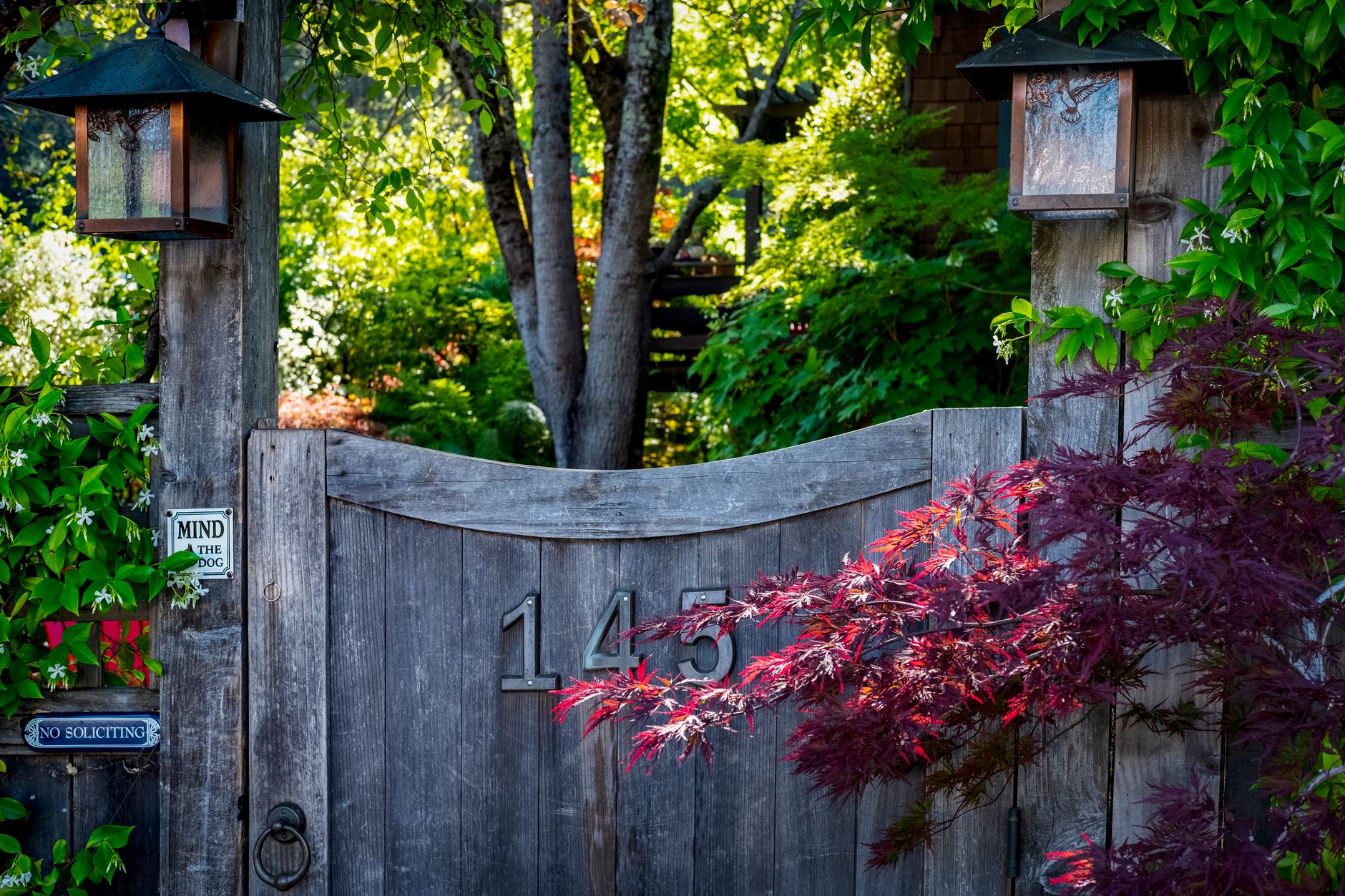
A serene scene with a wooden gate surrounded by vibrant foliage and decorative lanterns in Austin, TX

Questions about gate posts, slopes and buried lines on an Austin lot

2026-10-06

What should be located before any post hole is dug?

Buried lines come first. Water, gas, electric and communication lines run under front yards and along drives all over Travis County, and a post hole is exactly the kind of digging that finds them the hard way. Texas has a free call-before-you-dig line, reached by dialing 811, and the utilities mark their lines with paint and flags in a few working days. Those marks show where a hole can go and where it cannot.

Private lines are a separate matter. Irrigation pipe, a lighting cable run to a lamp post, a wire feeding a mailbox light or a gas line to an outdoor grill are often not on any public map. The crew walks the proposed post locations looking for sprinkler heads, valve boxes and lines of disturbed turf. On older lots in Hyde Park or Clarksville, where the yard has been dug up and patched many times, probing with a thin rod before the auger goes in is routine.

If a marked line sits where a post wants to go, the post moves. Shifting a hinge post a foot is cheap. Repairing a cut line is not, and it can interrupt service to the whole block.

How wide should the opening be?

The opening is the clear distance between the posts, and it is figured from the hardware outward. A leaf has its own width. Hinges take a little room on the hinge side. The latch and keeper take a little on the other. A small margin on top lets the frame swing without touching either post. Add those up and the result is the post spacing.

For a walk gate, the working question is what has to pass through it: a person, a wheelbarrow, a stroller, a lawn mower. For a drive gate, it is the widest vehicle and the swing of its mirrors. A leaf that is a few inches narrower than the vehicle needs forces a tight turn every time, and drivers end up clipping the post.

A dual swing gate across a wide drive splits the load into two leaves, which lowers the weight on each hinge post. It also needs a center stop so the leaves do not swing past each other, and a latch or drop rod that engages the ground. All of that is planned before the posts go in.

How does a sloped drive change the gate?

Slope changes which way the leaf can open and how the bottom rail has to be built. Austin has plenty of hillsides, from the streets climbing toward Mount Bonnell to the terraced lots around Travis Heights. A drive that rises from the street toward the house will drag an inward-swinging gate across the pavement unless the gate swings the other way or the hinges are mounted high enough to lift the leaf as it opens.

There are a few ways crews handle it. The simplest is to reverse the swing. Another is to build a rising hinge, which lifts the leaf a little as it opens. A third is to use a gate that follows the slope, with the bottom rail cut at an angle that matches the grade. Each option has trade-offs in appearance and in how the latch lines up when the leaf is closed.

Ground clearance on a slope is measured at the lowest point of the swing, which is not always the closed position. A leaf that clears the pavement when shut can scrape halfway through its arc.

Do the posts need to be bigger than the fence posts?

Yes, in almost every case. A fence post holds a panel that leans on its neighbors. A gate post holds a swinging leaf that pulls on it with a lever arm every time someone opens it. The hinge post takes the most punishment, since the weight of the leaf hangs from it, and the pull gets worse the wider the gate is.

A heavy leaf built from galvanized steel tubing, with a full run of pickets and a diagonal brace, wants a thick-walled steel post and a wide concrete footing. A lighter aluminum picket gate puts less strain on its post, but the footing still has to resist the twist. A post that was perfectly fine for the fence on either side often gets replaced or doubled up at the gate.

Wooden posts rot at the ground line, especially in the damp ground near the Colorado River and in low spots by Lady Bird Lake. Steel posts set in concrete last longer, provided the top of the footing is crowned so water runs away from the metal.

What if the old fence line is crooked?

Most old fence lines are. Settling, patching, tree roots and decades of different owners all push a fence away from a straight line. The crew has to decide whether the new gate follows the old line or corrects it.

The answer depends on what the gate sits between. A gate that fills a gap in an old picket fence usually follows the fence, so the leaf looks like it belongs. A gate that anchors a new run of fence can set the line, and the old fence gets adjusted to meet it. In either case the gate posts themselves must be plumb, even if the fence beside them leans. A plumb post next to a leaning fence looks odd for a moment, then looks right once the leaf is hung.

On narrow lots in Tarrytown or Clarksville, the line also has to respect the property edge. Setting posts a few inches over a boundary causes neighbor trouble that no hinge can fix, so the survey pins or a recent plat get checked first.

Does a gate need a different footing near a creek or low spot?

Often, yes. Low ground near Bouldin Creek, Barton Springs Pool or the lower slopes around Zilker Park holds water longer than the rest of the neighborhood. Soil that stays damp swells and softens, and a footing in it can settle or shift sideways under load.

Crews respond with wider holes, a layer of compacted gravel at the base so water can drain away, and a collar of concrete poured a little proud of the surrounding ground. Where the soil is truly soft, a deeper post or a drilled and reinforced footing may be needed. A crew that sees water seeping into the hole as it is dug adjusts on the spot rather than hoping the concrete will sort it out.

Can a gate be installed on top of a retaining wall or a slab?

It can, but the post has to be anchored differently. A post cannot be sunk into a poured slab or the top of a wall without a plan. The usual method is a base plate welded to the bottom of the post and bolted down through the slab with anchor bolts set in epoxy. The plate spreads the load, and the bolts resist the pull from the leaf.

The slab has to be thick enough and sound enough to hold the bolts. A cracked or thin slab will not take the load, and a retaining wall built from loose block or stacked stone cannot carry a gate at all. In those cases the post goes into the ground behind or beside the wall and the leaf spans the gap.

What are the first signs something was done wrong?

A gate that was hung well on well-set posts stays quiet. The early warning signs are small: a latch that needs a lift to catch, a faint scuff arc in the pavement, a gap at the top of the leaf that is wider than at the bottom, or a hinge pin that squeaks and then starts to bind. Any of these points to a post that has begun to lean or a frame that has started to rack.

Caught in the first season, the fix is usually a shim, a hinge adjustment or a new brace. Left for a few years, the fix becomes a reset footing.

Most gate trouble in Austin traces back to the two holes dug on the first day. Getting those right, in whatever ground the lot happens to have, does most of the work.
Read more →

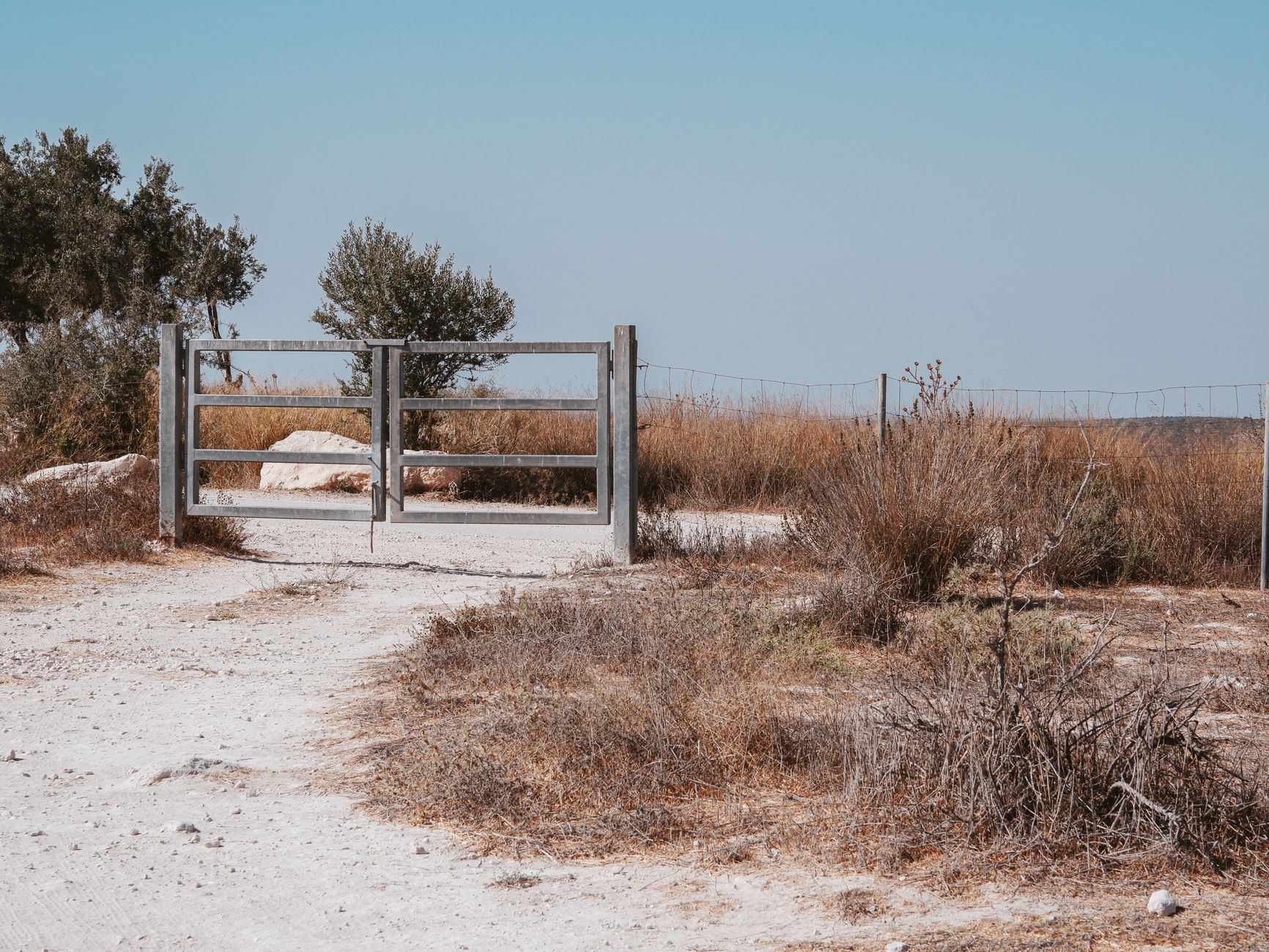
A rustic wooden gate in a countryside setting

What happens on the day a swing gate goes in, hour by hour

2026-10-06

A gate installation looks like one job from the street, but the crew treats it as six small jobs that have to happen in order. Skip one, or do them out of sequence, and the gate shows it within a season. In Austin, TX the order matters even more than elsewhere, because the ground changes from limestone to expansive clay across a few miles and the weather can undo a morning of work in an hour.

What is the order of work on installation day?

The sequence is layout, digging, setting posts, curing, hanging and adjusting. Each stage has a check that must pass before the next one begins. The table below lays it out the way a crew would talk through it on the tailgate.

StageWhat happensWhat gets checked
LayoutStakes and string mark the hinge post, latch post and the arc of the leafOpening width, slope of the drive, distance to the fence line
DiggingPost holes are dug by auger, bar or rotary hammer depending on the groundDiameter, depth, firm walls, no standing water
Setting postsPosts go into the holes, braced plumb on two facesLevel on both faces, gap at top and bottom, string line
PouringConcrete fills the hole and is crowned at the topSlope away from the steel, no voids, post still plumb
CuringBraces stay on while the footing hardensHardness at the edge, no movement
HangingHinges and latch go on, the leaf is shimmed to ground clearanceSwing, latch alignment, self-closing tension

Notice that curing sits in the middle. That is the stage most homeowners expect to be skipped, and the one that causes the most trouble when it is.

Why does layout take longer than digging?

The first hour is mostly standing around with a tape and a ball of string. The crew drives a stake where the hinge post will go and another where the latch post will go, then pulls a line between them and looks at it against the fence, the drive and the house. On an older lot in Hyde Park or Clarksville, the existing fence rarely runs straight. A run that has been patched for decades wanders by an inch or two over every section, and the new gate has to look correct against that wandering line, not against a perfect one.

The opening is measured as the clear width the leaf needs, then widened for the hardware. A hinge adds a little on one side and the latch assembly adds a little on the other. A single swing leaf on a narrow walk is simple. A dual swing pair across a wide drive needs a center stop and a drop rod location worked out now, because moving either later means moving a post.

The slope gets read at the same time. A drive that falls toward the street in Travis Heights or Tarrytown changes how the leaf can open. A gate that swings outward on a falling drive clears the ground easily. A gate that swings inward onto a rising drive will scrape unless the hinges are set high or the gate swings the other way. Settling this with stakes costs nothing. Settling it after the posts are poured costs a day.

How does the ground decide the digging method?

The Balcones Fault runs through Travis County and splits the city into two kinds of dirt. West of the fault the Texas Hill Country starts, and limestone sits near the surface around Mount Bonnell and the slopes above the Colorado River. East of it, in Mueller and Bouldin Creek, the soil is black clay that swells and shrinks with the weather.

In clay, a gas auger is the usual tool, followed by a hand digger to square up the bottom and cut a slight bell shape if the footing calls for one. In limestone, the auger stalls, so the crew switches to a rock bar and a rotary hammer, chipping a round hole a ring at a time. Both methods end at the same place: a clean hole with firm walls and nothing loose at the bottom.

Water gets checked at this stage too. Near Lady Bird Lake, Zilker Park and Barton Springs Pool, the ground can hold moisture long after the rain stops. A hole with standing water gets bailed and the soft clay on its walls gets cut back to firm ground before anything is poured.

What does setting the posts involve?

A post goes into the hole and gets held with wood braces staked at an angle on two sides. Then comes the level. It is held against one face, adjusted, held against the adjacent face, adjusted again, and the first face is rechecked because moving one often disturbs the other. Square steel tubing is easy to read this way. A round post needs a plumb bob or a straightedge with a level taped to it.

Two posts then get compared to each other. The gap measured at the top and at the bottom should match within a small fraction of an inch. If the top is wider, the posts lean apart and the frame will hang loose. If the top is narrower, they lean together and pinch the leaf. The string line stays tied between the posts for the whole pour, so any drift shows up as a change in the line.

A hinge post carries more of the load than a latch post, so it often gets the deeper or wider footing. A heavy galvanized frame full of pickets pulls on its hinge post every time it opens, and a post that was sized for a light aluminum panel will not hold it.

Why does pouring finish with a crown?

Concrete goes into the hole in layers, with a rod or a stick worked through it to push out air. At the top, the crew trowels a slope that falls away from the steel. That slope is a drainage detail, and it protects the steel at the point where rust starts. Water that sits in a ring around the base of a post works its way between steel and concrete and eats the coating at the ground line. A crowned collar sheds it.

The post gets one more level check before the concrete starts to stiffen. A post pushed a hair out of plumb during the pour is easy to nudge back in the first few minutes and nearly impossible to fix later.

How long should a footing cure before the gate goes on?

Several days is the working answer in normal weather, and longer when it is cool and damp. The crew checks by pressing a thumbnail or a screwdriver tip into the concrete at the edge. If it dents, it waits. In a hot Austin summer the surface can look hard in a day while the center is still soft, so the braces stay on and nobody leans on the post.

This is also the stage where rain can interfere. A footing that gets soaked while it is still green can lose surface strength. A tarp or a sheet of plastic over the top of each footing solves most of it.

How is the gate hung and adjusted?

Hanging starts with blocks under the leaf, set to the planned ground clearance. Hinges are lined up on a string so both pins share one vertical axis, then welded or bolted in place. The leaf swings freely with no binding, and the crew walks it through its full arc watching the low corner, the hinge side and the latch.

Adjustment follows. A self-closing hinge has a tension screw, and the crew turns it a quarter turn at a time, swinging the gate each time, until the leaf closes firmly and the latch catches without a slam. Thin shims go behind a hinge to raise or lower a corner. The latch keeper is set last, once the leaf has settled into its final position, so the bar lands exactly in the catch.

The diagonal brace in the frame gets a final look. It should rise from the bottom corner on the latch side to the top corner on the hinge side, so it holds the free end up. A brace running the other way looks the same from a distance and does the opposite job.

What gets rechecked after the first season?

Clay moves, so a good crew expects a small adjustment after the first dry spell and the first wet one. A quarter turn on a hinge screw or a thin shim usually brings the gate back. A scuffed arc in the ground, a latch that has to be lifted or a gap at the top of the leaf wider than the bottom are early signs worth catching.

A gate installed in this order, with a check at each stage, tends to stay square for years. The work looks slow on the day and saves time every season after.

Read more →